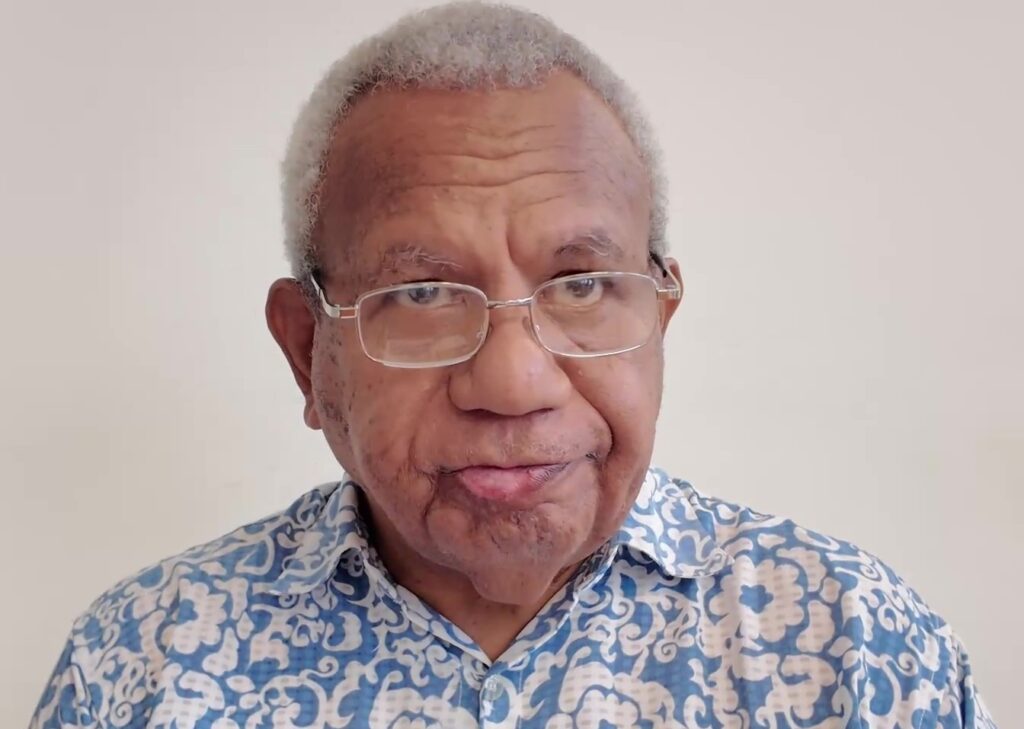
Port Moresby, 6 December 2025 – A decade after being arrested in Darwin and accused of trafficking nearly a kilogram of crystal methamphetamine, former Telikom PNG CEO Charles Litau has spoken publicly for the first time about the ordeal that almost destroyed his life — and the faith that saved it.
Litau, a respected corporate figure and Seventh-day Adventist elder from Papua New Guinea, said he unknowingly became a victim of an international drug syndicate in 2015 after being lured with what appeared to be a high-level overseas job opportunity.
A business-class trip to disaster
Litau recalled being contacted by a man offering him a senior position that required attending interviews in Hong Kong and Guangzhou, China. The travel costs, including business-class flights and hotel accommodation, were fully covered.
He spent about 10 days in Guangzhou waiting to meet supposed company representatives — who never arrived. Just before he was rerouted to travel home via Darwin, Australia, he was handed a bag of women’s footwear to “deliver to friends” as a favour.
He had no suspicion the items concealed drugs.
“I had no experience in the crystal methamphetamine business… I was so naïve,” Litau admitted.
When his suitcase passed through Australian customs on arrival in Darwin, officers scanned it twice before informing him drugs were inside.
“It came as a shock because I had no idea what was going on… If I had known, I would have left those things.”
Facing a life sentence in a foreign land
Australian Federal Police charged him with possession of more than 700 grams of methamphetamine — a federal crime that carries a life sentence in Australia, and the death penalty in many Asian jurisdictions.
Originally assigned a public defender, Litau’s family later hired a private legal team, who challenged the admissibility of evidence and fought the case all the way to trial in the Northern Territory Supreme Court.
The jury eventually found him not guilty on 22 January 2016, ending a 10-month legal and emotional nightmare.
“The foreman stood up and said two words — not guilty… My daughter had tears of joy,” Litau recalled.
Prison life: Faith, fear and survival
Litau spent his entire detention inside a high-security Darwin correctional facility while awaiting trial — a place where violence, gangs and intimidation were ever-present.
He said he survived by turning to the Bible and Christian fellowship.
“I read the Bible from Genesis to Revelation twice…Faith kept me alive in prison,” Litau remembered.
He worked in the prison kitchen, earning AUD$42 per week, and used his time to mentor other inmates — including helping one illiterate Aboriginal prisoner learn to read by using the Bible.
He also received protection from two large Pacific-Island inmates, including a Papua New Guinean serving time for domestic violence.
A warning for Papua New Guineans
Litau says the experience changed him forever — and he now feels compelled to warn others about the threat of transnational trafficking syndicates preying on unsuspecting travellers.
“In our culture we are kind — we help anyone…But kindness can make you vulnerable,” Litau said.
He urged Papua New Guineans to never carry items for strangers, no matter how harmless they appear.
“Never accept anything you don’t know — even a laptop or a mobile phone.They can put you away for a long time,” Litau said.
He also said PNG authorities lack the capacity to confront large-scale narcotics networks operating across borders.
A journey from trauma to forgiveness
Despite losing his career and public reputation, Litau said he has chosen to forgive the people who set him up.
“I said to myself, if God has to answer my prayers, I have to forgive those people… I hold no hard feelings,” Litau said.
He believes his story now has a purpose: to spare others from the same fate.
“This interview fills that gap in my life — to use the story positively to help others,” Litau concluded.
###