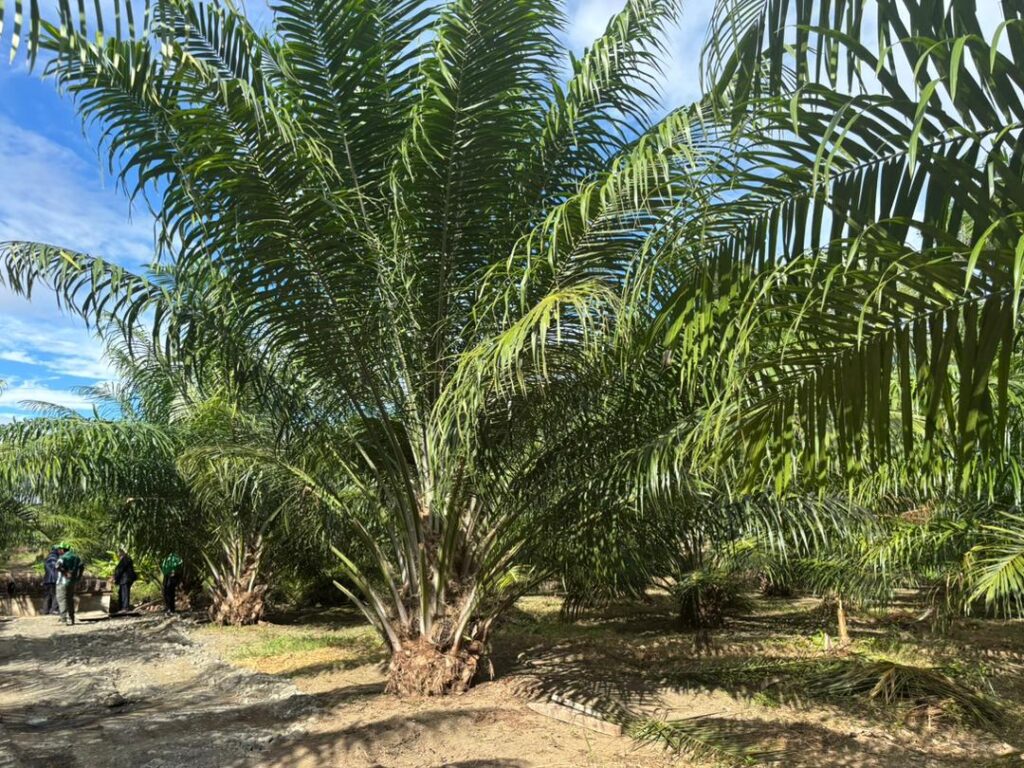
Zifasing Village, Markham Valley, Morobe Province, Friday, September 5, 2025 – The fertile Markham Valley is set to become one of Papua New Guinea’s newest oil palm frontiers after Oil Palm Minister Hon. Francis Maneke officially launched the Zifasing Village Oil Palm (VOP) Project in Wampar LLG, Morobe Province.
In a spirited address before hundreds of villagers, leaders, and industry stakeholders, Minister Maneke said the project would not only transform the economic landscape of Markham but also stand as a model for other parts of PNG.
“This is more than just planting oil palm,” he said. “It is about securing a future for families, communities, and our country. The government’s goal is to plant one million hectares nationwide, and 100,000 hectares must come from Morobe. Today we have planted 106 hectares, and this 5,000-hectare project is the starting point of something far bigger.”
Community and Partner Support
The minister began by thanking all those who had made the launch possible — local leaders of Wampar LLG, the Zifasing landowners, Markham Farming management, Oil Palm Industry Corporation (OPIC) General Secretary Kepson Pupita, Ramu Agri Industries Ltd, and the hardworking staff who contributed.
He paid particular tribute to the people of Zifasing for “opening their land and their hearts to development,” saying this kind of community spirit was critical to the success of large-scale agriculture.
“This day belongs to the community. Without your willingness, without your vision, none of this would have been possible,” he told the crowd.
Expanding Morobe’s Agricultural Footprint
Minister Maneke underlined that oil palm remains one of PNG’s strongest and most reliable commodity exports, and Morobe has the land, climate, and people to make it a leading province in the sector.
Already, the project has successfully planted 106 hectares, but the long-term plan covers a massive 5,000 hectares. Maneke emphasised that this expansion will feed into PNG’s larger commodity strategy, which targets additional annual revenue from agriculture and sets oil palm as a cornerstone of the nation’s export economy.
“Palm oil is the future. This industry will continue to support our economy, and with Morobe taking the lead, we will ensure thousands of families benefit from the work of their own hands,” he said.
Global Standards and Sustainability
The minister also highlighted the importance of following international standards in land use and environmental management. He said the government would ensure the project aligned with international principles, protecting both communities and the environment.
“We are not just planting for today. We are planting for tomorrow, and for the generations that will come. The United Nations recognises PNG’s contribution to global biodiversity and climate, and this project must uphold those values,” Maneke stressed.
He reassured landowners that their land titles remain intact and that oil palm development must be carried out in a way that respects customary ownership.
Fair Pricing and Industry Reforms
A key part of Maneke’s message was directed at growers and industry regulators. He confirmed that OPIC had been tasked with reviewing the pricing formula for fresh fruit bunches to ensure growers receive a fair and sustainable return for their harvest.
“Our growers must not be left behind,” he said. “They must get fair prices for their produce, and that is why we are pushing OPIC to deliver a better pricing model.”
He also announced that the government is preparing to launch PNG’s first national policy for oil palm.
Partnerships with Milling Companies
Minister Maneke extended an invitation to established industry players — including Ramu Agri Industries Ltd (RAIL) and New Britain Palm Oil Ltd (NBPOL) — to partner with the Zifasing project.
“These companies have the experience, the infrastructure, and the markets. With their involvement, we can ensure this project is not only successful but becomes a national model for oil palm development,” he said.
Challenges and the Way Forward
While praising the achievements so far, the minister also issued a challenge to both project managers and the Morobe Provincial Government.
He urged the project to package the full 5,000-hectare project plan and submit it for approval before Christmas, so that financial and technical backing could be secured from government, milling companies, and development partners.
He further called on Morobe Governor Hon. Luther Wenge and Huon Gulf MP Hon. Jason Peter to provide strong leadership and ensure Morobe achieves its target of 100,000 hectares of oil palm under cultivation.
“Morobe must not only be part of this national program — it must lead it,” he said. “This province has the capacity to show the rest of PNG what responsible and profitable oil palm development looks like.”
A New Dawn for Markham Valley
Minister Maneke ended his address on a celebratory note, reminding the people that the project launch comes just days before PNG marks its 50th Independence Anniversary.
“This is a gift to our children and grandchildren. It is a project that will provide jobs, income, and security for decades to come. As we celebrate 50 years of independence, let us also look ahead to the next 50 years, with oil palm as one of the driving forces of our national economy,” he said.
ENDS