Port Moresby, Sunday, 6 July 2025 — Minister for Agriculture Hon. John Boito has reaffirmed that chicken supply across Papua New Guinea has returned to normal, following temporary disruptions caused by shipping delays. His remarks came after an extensive inspection tour of key poultry production sites on Thursday, 3 July 2025, during which he praised the resilience, capacity, and expansion of PNG’s leading producers: Zenag Chicken and Tablebirds.
Accompanied by Agriculture Secretary Dr. Sergie Bang and officials from the Department of Agriculture and the National Agriculture Quarantine and Inspection Authority (NAQIA), Minister Boito visited Zenag Farm in Bulolo, Tablebirds’ Wanaru Farm at 6-Mile, and Tablebirds’ Nadzab Farm in the Markham Valley to personally assess the status of poultry production.
“What we have seen is very encouraging,” Minister Boito said. “Our poultry industry is not only stable — it is growing. Production levels are strong, and companies are investing significantly in future capacity. The recent shortage in Port Moresby was not a supply issue, but rather a temporary logistical disruption.”

Zenag Chicken: High Capacity, Major Expansion Underway
At Zenag Chicken, which supplies an estimated 70% of the PNG poultry market, Minister Boito was briefed by Processing Plant Manager Gary Welle and Logistics Manager Etienne Boucher. The company is currently operating at full capacity, processing up to 60,000 birds per day, or about 400 metric tonnes per week.
Zenag has launched a major expansion initiative, including:
• Construction of seven new broiler sheds, each designed to house 60,000 birds.
• Projected 19% production growth by end of 2025.
• A target of up to 28,000 metric tonnes of chicken meat annually by 2026, up from current levels.
Despite logistical hurdles such as deteriorating roads and a lack of reliable electricity — which has forced the company to operate on generators for over two years — Zenag continues to uphold strict biosecurity protocols and is investing in international food safety certification (ISO 22000) to enhance both local and export market confidence.
“Zenag is committed to delivering high-quality, fresh poultry to PNG households,” said Mr. Welle. “We are proud of our growth, and with the right government support — particularly on roads and power — we can do even more.”
Tablebirds: Meeting Demand Through Innovation and Local Investment
Minister Boito’s next stop was Tablebirds, where he was briefed on the company’s integrated production model spanning breeding, hatching, broiler farming, processing, egg production, feed manufacturing, and SME outgrower support.
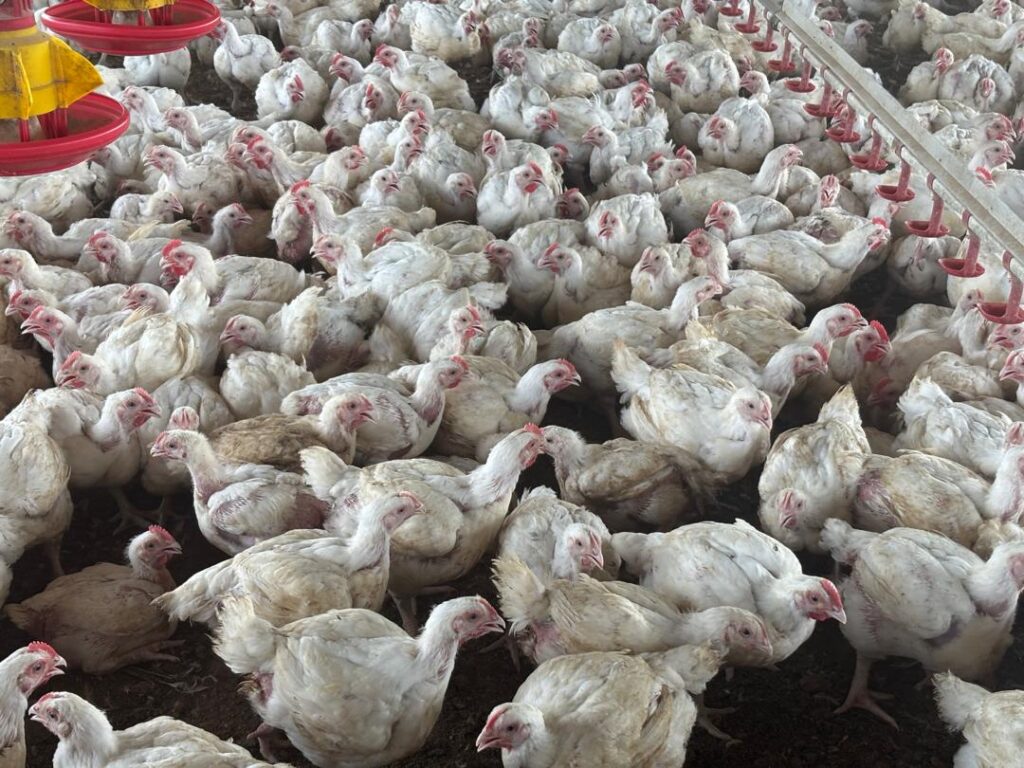
Key highlights include:
• A current processing rate of 25,000–30,000 birds daily, totalling 200 metric tonnes per week, with plans to increase to 500 metric tonnes per week once a new K20 million processing plant comes online later this year
• 45 broiler sheds at Nadzab and 19 at Wanaru, including 10 advanced tunnel sheds.
• A weekly hatching capacity of 650,000 eggs, with over 300,000 birds raised internally and the rest sold to independent growers.
• Weekly output of approximately 8,667 egg cartons, supporting both supermarkets and village markets.
• Feed mill capacity of 1,700 metric tonnes, using a mix of local and imported raw materials.
Additionally, Tablebirds continues to support SME poultry farmers by providing day-old chicks and technical guidance, contributing to rural employment and food security.
“We have both the capacity and the commitment to feed Papua New Guinea,” a Tablebirds manager said. “With continued support from the Government, particularly in the form of biosecurity policy, rural infrastructure, and support for feed grain production, we can take this industry to the next level.”
Minister Boito: Buy Local, Support Local
Minister Boito urged Papua New Guineans to take pride in local poultry products, noting that PNG-grown chicken is fresher, safer, and of higher quality than many imported alternatives.
“Let us support our farmers and our economy by buying PNG chicken,” the Minister said. “Zenag and Tablebirds are showing what is possible when local expertise meets visionary investment. They are not only keeping our shelves stocked — they are helping us build a self-reliant nation.”
He also assured that the Department of Agriculture will continue working closely with stakeholders to support the Government’s 100% Local Poultry Production Policy, reduce dependency on imports, and build a robust domestic livestock sector.
“Your chicken is on its way. Our producers are doing a tremendous job. Now, let’s do ours — by backing them.”