Goroka, Eastern Highlands | Friday, May 16, 2025 — Las Malo Coffee (LMC), a rising star in Papua New Guinea’s coffee industry, has transformed from a grassroots start-up into a model of coffee enterprise success, thanks to targeted support from the Coffee Industry Corporation Ltd (CICL)–PNG Agriculture Commercialisation and Diversification (PACD) Project, funded by the Government of Papua New Guinea with support from the World Bank.
A delegation comprising World Bank officials, the Department of Agriculture, the Department of National Planning, CICL, and PACD Project officers visited the LMC factory in Goroka on Friday, May 16, 2025, to witness firsthand the remarkable progress made by the locally owned company.
PACD Project Coordinator Mr Alphy Semi commended the Las Malo team — led by owners Ken and Maureen Dumudi — for their entrepreneurial spirit and rapid growth in the coffee marketing space.
“Las Malo has come a long way in just four years. They had never received any government support until PACD stepped in,” said Mr Semi. “Today, they stand as a powerful example of what strategic investment and determination can achieve for MSMEs in Papua New Guinea.”
The company received a K360,000 grant under PACD’s 80:20 matching scheme for micro, small, and medium enterprises (MSMEs), contributing K72,000 of its own equity to complete a K432,000 investment in vital equipment. The support was spearheaded through Component 3.2 of the PACD Project.
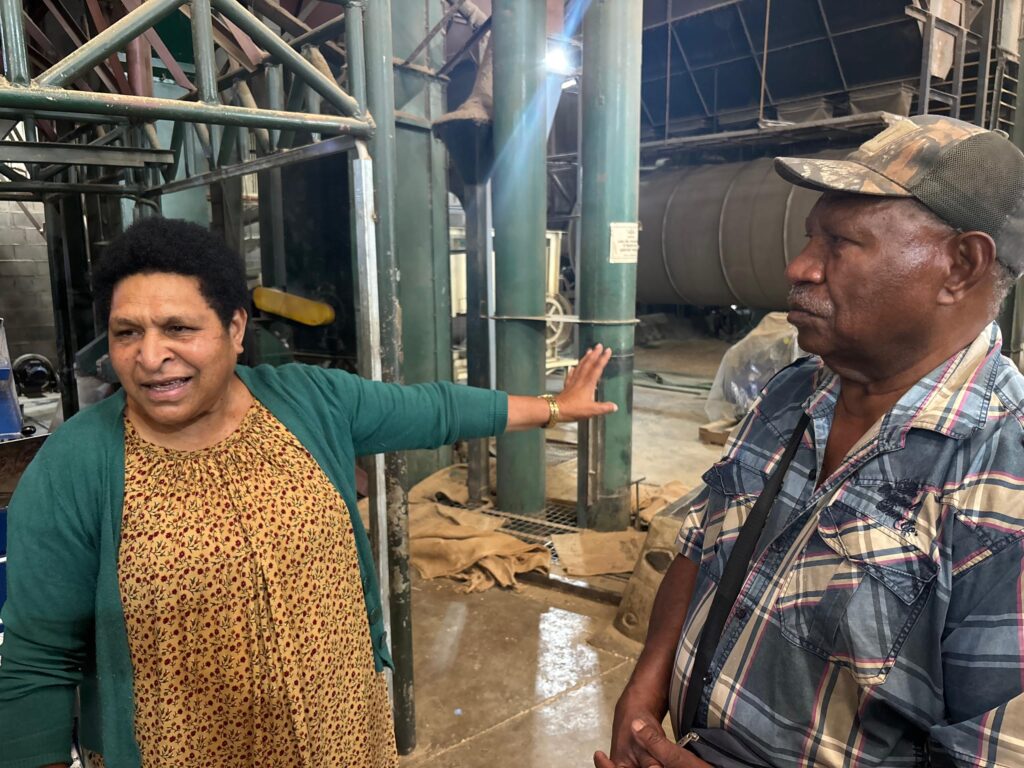
Modern Machinery Powers Coffee Excellence
During the visit, LMC Director Mrs Maureen Dumudi outlined the game-changing impact the PACD support has had on the company’s efficiency and export capacity. The funding contributed towards the purchase of a Color Sorter, Huller, Gravity Separator, and Compressor — critical machinery that has revolutionised factory operations.
“This is more than equipment — it’s a lifeline for our farmers and our export future,” Mrs Dumudi told the visiting delegation. “We are grateful to the World Bank and CICL-PACD for helping us secure this support. It has enabled us to offset our loan from our Australian export partner, Upstream Coffee Importers, who initially financed the machinery at K900,000.”
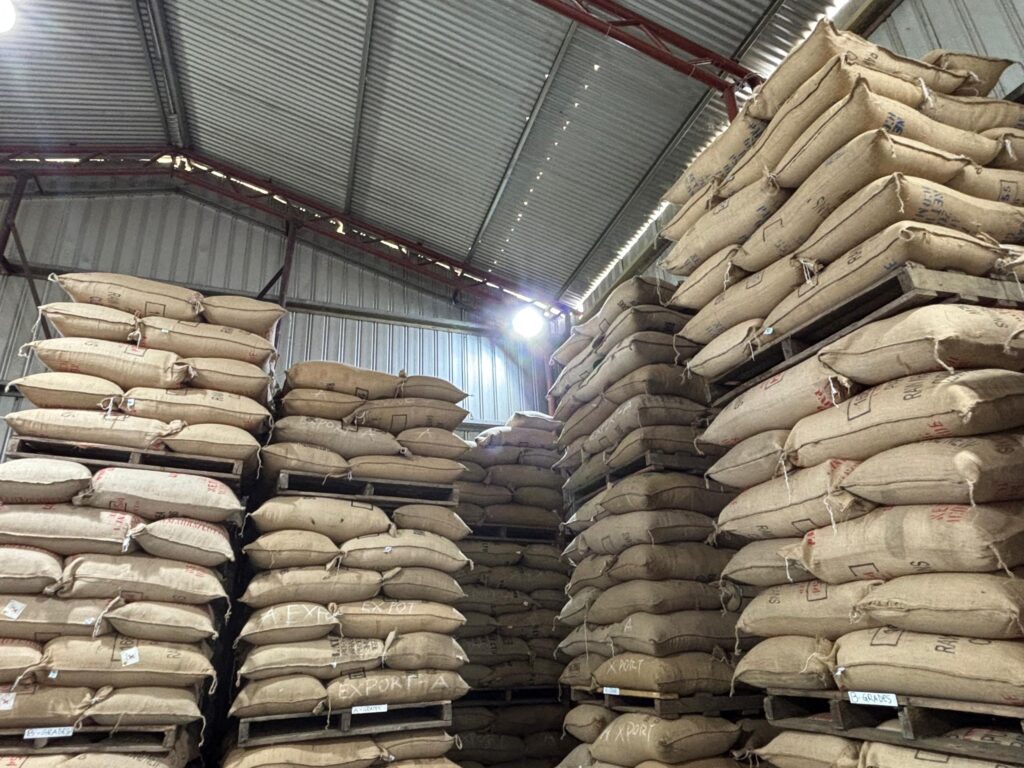
Before the upgrade, LMC was hiring 150 hand-sorters at a monthly cost of K30,000, producing only two to three containers of coffee per month. With the new machines, the factory now produces up to eight containers in a single month and delivers a consistent export-grade quality of 97 percent.
“Our sensor-powered packing system and high-capacity compressor deliver better yields across all grades — A, B, and Y — while ensuring quality consistency,” she said. “We now have a one-tonne packing line awaiting CIC approval, and our Australian buyers are already pleased with the improvements.”
World Bank Commends Las Malo’s Growth
World Bank PACD Team Leader Mr Allan Oliver praised the transformation, highlighting the company’s ability to expand services and improve productivity.
“It’s really good to see how you’ve progressed the operations,” Mr Oliver said. “We were here in 2022 — this place was basically empty at that time. But now, you’ve not only improved efficiency, you’re also offering additional services, such as processing parchment into green bean for others. That’s an added value and a broader opportunity for the industry. We’re really happy to see how far you’ve come.”
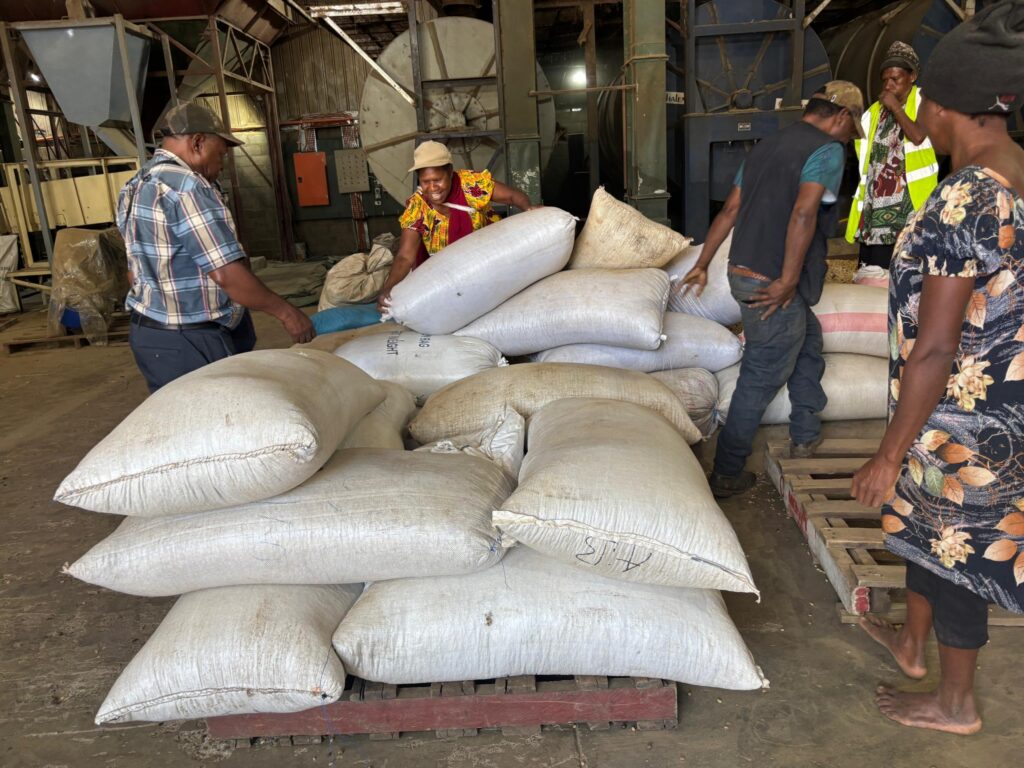
Building a Network of Rural Coffee Growers
Established in 2018 and operating at full capacity since 2020, Las Malo Coffee has built strong partnerships with more than 13,500 rural coffee growers across all eight districts of Eastern Highlands Province, as well as neighbouring provinces including Chimbu, Mt Hagen, Southern Highlands, and Madang. The company plays a vital role in bridging the logistics gap by helping farmers transport their parchment coffee to processing and export points.
“From 2019 to 2024, we’ve contributed over K13 million in GST to the national government and remain fully compliant with our IRC tax obligations,” Mrs Dumudi noted, reinforcing the company’s commitment to economic accountability.
A Model for Rural Empowerment
The LMC story embodies the broader goals of the PACD Project — to increase production, improve market access, and empower local communities through sustainable agribusiness development. With a strong emphasis on rural engagement, women’s empowerment, and fair trade practices, LMC is now positioned as a benchmark for similar ventures across PNG.
Mrs Dumudi concluded her remarks by thanking the PACD and World Bank teams for their continued support.
“We are not just running a business,” she said. “We are creating livelihoods, growing communities, and raising the standards of PNG coffee on the world stage.”
###